Table of Contents
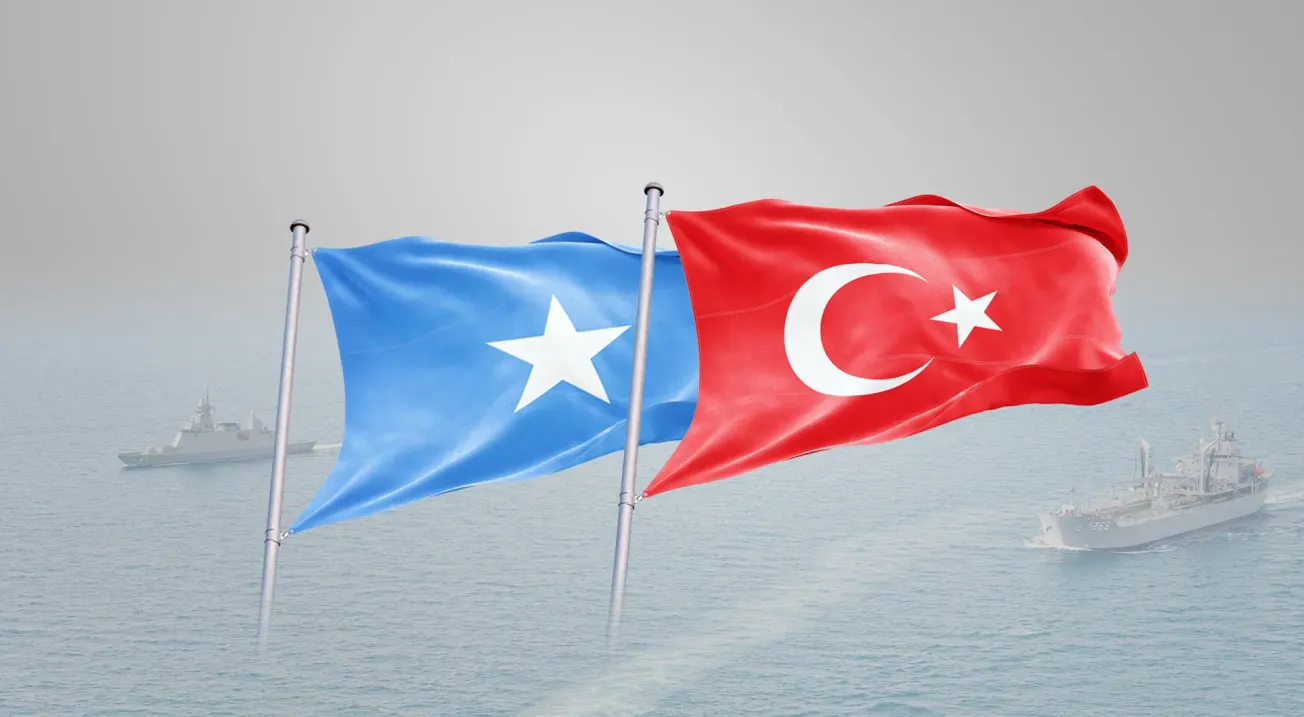
In recent commentary, some Somalis described on X and other platforms the relationship between Somalia and Turkey as “semicolonial,” arguing that Ankara’s growing footprint reflects an imbalance that has steadily deepened over the past decade. The concern deserves serious attention. Yet the language of semicolonialism risks obscuring more than it clarifies. A more precise interpretation is that the relationship represents a strategic but asymmetric partnership shaped by Somalia’s fragility and Turkey’s rising regional ambitions.
The origins of this partnership lie in the 2011 famine, a moment of acute crisis that drew global attention but limited physical engagement. It was in this context that Recep Tayyip Erdoğan visited Mogadishu, becoming the first non-African leader in decades to do so. Turkey’s response differed from that of many Western actors. Rather than managing Somalia from a distance, Ankara embedded itself on the ground, delivering aid, reopening its embassy, and investing in visible reconstruction efforts. This early engagement generated considerable goodwill and positioned Turkey as a reliable partner in a moment of national trauma.
What followed was a rapid expansion from humanitarian relief into infrastructure and economic management. Turkish firms became central to the operation of Mogadishu’s port and airport, two of the country’s most important revenue sources. At the same time, Turkey funded hospitals, schools, and roads, while offering scholarships and cultivating cultural ties. For a country emerging from decades of state collapse, such investments were not trivial. They filled urgent gaps that few others were willing or able to address.
However, this phase also laid the foundations for asymmetry. Control, or partial control, over critical infrastructure inevitably raises questions about dependency. When key revenue streams are managed by foreign entities, even under formal agreements, the host state’s fiscal autonomy can be constrained. In Somalia’s case, where institutions remain weak and oversight mechanisms are limited, these concerns are amplified. The issue is not simply foreign involvement, but the terms under which that involvement occurs and the capacity of the Somali state to negotiate and regulate it.
The relationship deepened further with the opening of Turkey’s military training base in Mogadishu in 2017. This marked a transition from economic and developmental engagement to strategic cooperation. Thousands of Somali soldiers have since been trained under Turkish supervision, embedding Ankara within Somalia’s security architecture. For a country confronting persistent insurgency, such support is both valuable and necessary. Yet it also reinforces reliance on a single external partner in a domain central to sovereignty.
These dynamics lend credibility to concerns about imbalance. Somalia depends on Turkey for infrastructure, investment, and elements of security. Turkish influence, in turn, extends across economic, political, and military spheres. In this sense, the relationship is clearly unequal. But inequality alone does not amount to semicolonialism. Unlike historical colonial arrangements, Turkey does not exercise formal political authority over Somali governance, nor does it administer territory or impose direct rule. Its presence has been invited and negotiated, even if those negotiations occur under conditions of structural weakness.
A more useful comparison may lie in the broader landscape of contemporary international engagement in fragile states. From Gulf investments to Western aid frameworks and the infrastructure projects associated with China, asymmetrical partnerships are common. They reflect disparities in capital, capacity, and institutional strength rather than a single actor’s design for domination. Somalia’s experience with Turkey fits within this pattern, albeit with distinctive features shaped by Ankara’s emphasis on visibility and long term presence.
The critique nonetheless points to a deeper problem that extends beyond any single partner. Somalia’s limited bargaining power and institutional fragility make it difficult to structure external relationships on equal terms. Agreements over ports, airports, and security cooperation are negotiated in an environment where immediate needs often outweigh long term considerations. This creates the risk that short term gains in stability and development come at the cost of sustained dependency.
Addressing this imbalance does not require disengagement from Turkey or other partners. On the contrary, Somalia’s recovery depends on continued external support and investment. The challenge is to strengthen domestic institutions so that such partnerships can be managed more effectively. This includes improving transparency in contracts, enhancing regulatory capacity, and diversifying international relationships to avoid overreliance on any single actor.
For Turkey, the sustainability of its engagement also depends on recalibrating perceptions. A partnership that is widely seen as extractive or overly dominant will face growing scrutiny, regardless of its tangible benefits. Ensuring that Somali stakeholders have a meaningful role in decision making and that economic arrangements are perceived as fair would help mitigate such concerns.
The Somalia, Turkey relationship is therefore best understood not as a modern form of colonialism, but as a pragmatic alignment between a fragile state and an ambitious middle power. It has delivered real benefits, from infrastructure to security assistance, while also creating new forms of dependency. Recognizing both sides of this equation is essential. The task ahead is not to label the relationship in sweeping terms, but to reshape it in ways that gradually reduce asymmetry and enhance Somali agency.
In the end, the imbalance that troubles critics is less a product of Turkish intent than of Somali circumstance. Changing that reality will depend on the slow and difficult work of state building. Until then, asymmetry will remain a defining feature of Somalia’s external partnerships, whether with Turkey or others.