Table of Contents
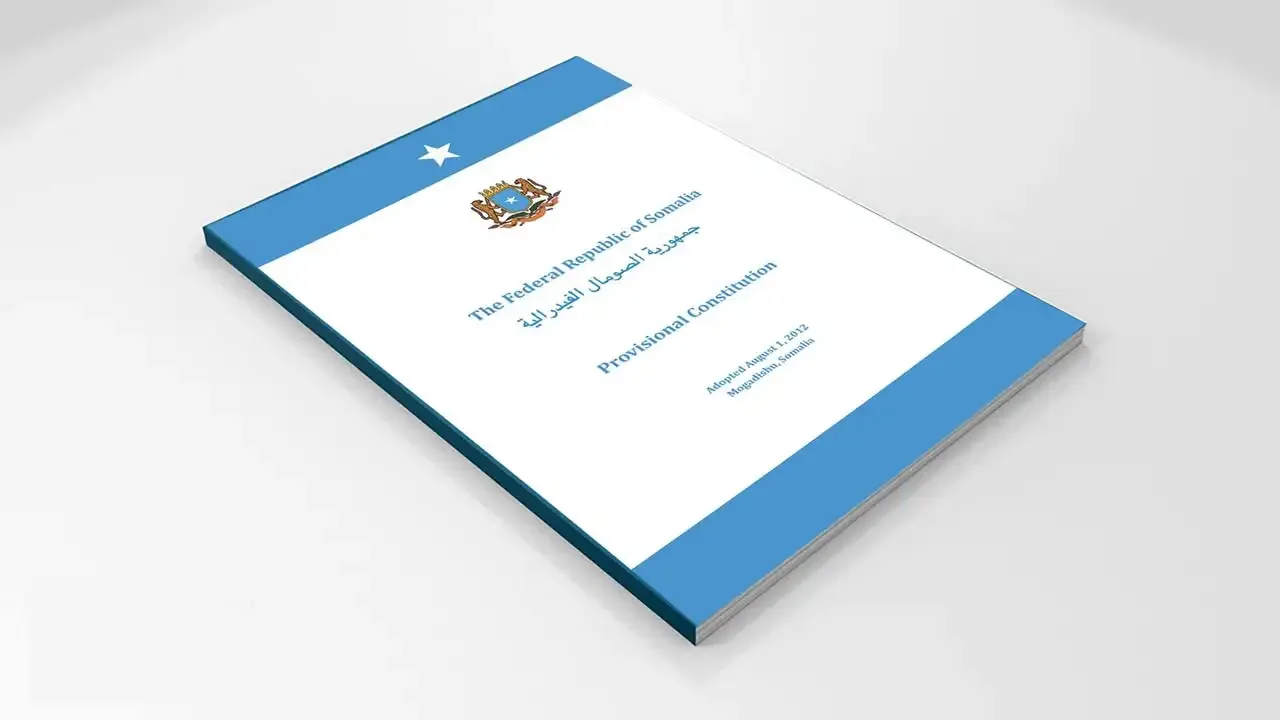
Somalia is once again navigating the delicate politics of constitutional change. In Mogadishu, parliament has approved amendments to the Provisional Constitution of Somalia, changes strongly supported by President Hassan Sheikh Mohamud and his allies in the federal government. The administration argues that the revisions are a necessary step toward completing Somalia’s long unfinished constitutional transition.
Yet the amendments have drawn fierce resistance from political opposition groups and from federal member states such as Puntland and Jubaland, which say the process lacked sufficient consultation and national consensus. Critics argue that constitutional revisions affecting the federal balance cannot be decided by the center alone. Instead, they insist that regional administrations and political stakeholders must be part of the process.
The disagreement has produced an unusual constitutional moment. The federal government is prepared to move forward with the revised framework passed by parliament. Opposition groups and several regional authorities continue to recognize the original 2012 provisional constitution. So, in practice, Somalia now faces two competing references for the same constitutional order. One is the amended document endorsed by the federal parliament and supported by the presidency. The other is the original provisional constitution that critics say remains the legitimate governing framework
Under normal circumstances, such disputes might unfold gradually through political negotiation. Somalia, however, faces a far more immediate deadline. National elections are expected to take place by May 15, 2026, less than two months away. The electoral calendar compresses the constitutional debate into a narrow and politically sensitive timeframe. .
Government officials appear ready to organize the vote under the amended provisions. Their opponents argue that the election must follow the procedures outlined in the original constitution. The approaching election therefore transforms a constitutional disagreement into a practical question and legitimate concerns about the rules that will govern the next transfer of political authority.
Somalia’s constitutional story has always been provisional. The 2012 document was adopted after decades of state collapse and civil conflict. It was designed as a transitional framework that would guide the rebuilding of national institutions until a permanent constitution could be negotiated and approved through broader national consultation.
Over time the 2012 document became the working foundation of Somali governance. Federal institutions emerged in Mogadishu while regional administrations consolidated authority across the country. The resulting political structure relied not only on constitutional text but also on ongoing negotiation among federal leaders, regional authorities and political factions.
The current dispute reflects those underlying tensions. Regional leaders have often been cautious about constitutional changes that could shift authority toward the federal center. Puntland has long positioned itself as a defender of federal autonomy, while Jubaland has periodically clashed with Mogadishu over questions of political authority and security coordination. Still, the competing documents guarantee further negotiation of constitutional changes until a broadly accepted document heads to a referendum to make it permanent.
Constitutional disagreements of this kind are not unique to Somalia. In the late eighteenth century the United States experienced a profound debate when leaders sought to replace the Articles of Confederation with the United States Constitution. Many political figures feared that the new document would strengthen the central government at the expense of the states.
The debate between Federalists and Anti-Federalists was intense, yet it unfolded through political institutions rather than conflict. Ratification conventions held across the states allowed citizens and political leaders to debate the new framework. The eventual adoption of a Bill of Rights helped reassure critics and broaden acceptance of the new constitutional order.
Spain offers a more dramatic historical illustration of competing constitutional visions during political upheaval. During the Spanish Civil War, the Republican government continued to operate under the Spanish Constitution of 1931, while the forces led by Francisco Franco rejected it and governed through military authority.
Two rival legal orders existed simultaneously. The constitutional conflict was ultimately resolved not through negotiation but through military victory. Franco’s forces prevailed and the republican constitution was abolished entirely.
Somalia’s situation is far less severe and should not automatically be interpreted as a constitutional crisis. The presence of competing documents of a constitutional framework can also reflect the normal growing pains of a developing federal system. Political debate over constitutional authority often precedes a more stable settlement.
The more immediate challenge lies in the approaching election. The question is not only which constitutional version is correct as advocated by either side, but which one will govern the conduct of the vote itself. Elections require clear rules, agreed procedures and a widely accepted legal foundation.
Resolving that issue requires urgent political engagement between the federal government, opposition groups and regional administrations. The election must occur by May 15 if Somalia is to maintain its political timetable. Yet if the rules governing the vote remain contested, the legitimacy of the outcome would quickly become disputed as well.
For that reason the competing versions of the constitution demand immediate political attention, particularly regarding the provisions that govern the election process. Putting aside the broader constitutional changes for the moment, the government, opposition groups and regional administrations should focus on agreeing on the specific provisions that will regulate the election itself. This question is the most urgent, even as the wider constitutional debate continues beyond the election timeline. Somali leaders may therefore need to reach a temporary understanding on the rules that will guide the vote. If necessary, a short delay could be considered, but only through a mutually accepted agreement that clarifies the legal framework for the election.