Table of Contents
For nearly two decades, Sultan Ahmed bin Sulayem stood at the helm of DP World, transforming a regional port operator into one of the world’s largest logistics conglomerates. Under his leadership the Dubai based firm acquired terminals from the Horn of Africa to Europe and embedded itself in supply chains that stretch from Shanghai to Southampton. Yet his tenure was never only about cranes and containers. In the Horn of Africa it carried unmistakable geopolitical overtones. His recent removal from the top post marks not only a corporate reshuffle but also a pause in one of the Gulf’s most politically sensitive investment strategies. It is unclear whether his ouster represents UAE's shift in strategy or Mr bin Sulayem’s name appearing in the disgraced Epstein files.
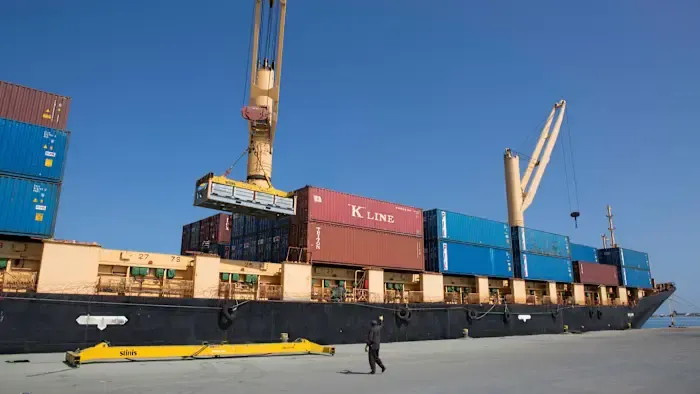
The most consequential of DP World’s ventures lies on the Gulf of Aden. In 2016 DP World secured a 30 year concession to develop and manage the port of Berbera in Somaliland. The company later expanded the deal, committing roughly $400m to upgrade the port, build a free zone and improve associated infrastructure. For Somaliland which still remains unrecognized internationally, the investment was transformative. For DP World it was strategic, expanding its influence in the Horn.
Berbera sits opposite Yemen at the mouth of the Red Sea, near one of the world’s busiest shipping lanes. Modernizing the port offered commercial logic. It also aligned with the United Arab Emirates’ broader ambition to project influence along critical maritime chokepoints from the Suez Canal to the Indian Ocean. Emirati firms, often operating in tandem with state policy, have invested heavily in ports across the region. Under Mr bin Sulayem, DP World became one of the most visible instruments of that strategy.
The scale of capital committed to Berbera had political consequences. Somaliland’s leadership has long argued that it meets the criteria for statehood. What it lacked was international backing and economic heft. The injection of hundreds of millions of dollars provided both tangible infrastructure and symbolic validation. A modern container terminal and free zone suggested permanence and viability. While the port’s development benefited Somaliland’s infrastructure, Mogadishu saw DP World propping up a breakaway province and advocating for dismemberment of Somalia.
Mr bin Sulayem did not shy away from the political implications. In public forums he spoke of Berbera as a gateway for trade into Ethiopia and the wider Horn of Africa. He appeared alongside Somaliland’s leaders at investment events and described the territory as stable and business friendly. Such endorsements from the head of a global logistics giant carried weight in diplomatic and commercial circles.
Privately and through intermediaries, DP World executives engaged policymakers and analysts in Western capitals to highlight the strategic logic of deeper engagement with Somaliland. Advocates of recognition in Washington and London often pointed to Berbera’s development as evidence that Somaliland could anchor stability in a turbulent region. While formal recognition by major powers has not materialized, the territory’s profile rose markedly as UAE-Somali relations suffered.
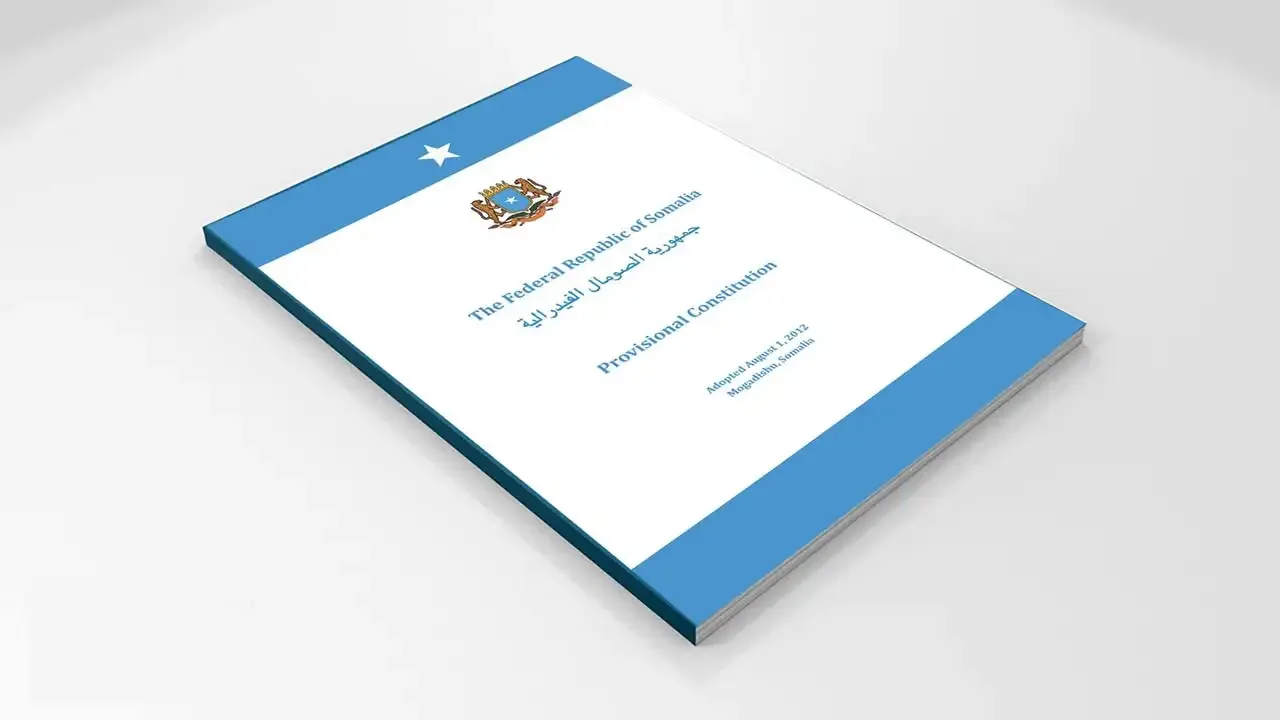
For Somalia’s federal government in Mogadishu, the arrangement was deeply contentious. Officials argued that port concessions signed with Somaliland authorities infringed on Somalia’s sovereignty. Tensions flared periodically. Yet DP World maintained that it was operating under a legitimate agreement with the de facto authorities controlling the territory, ignoring the de jure control of Somalia in all its regions including Somaliland.
The controversy illustrated a broader pattern. Across the Horn of Africa, Gulf states have used commercial investments to secure footholds in fragile political environments. Ports are not merely commercial assets. They confer leverage over trade routes, military access and diplomatic alignments. Under Mr bin Sulayem, DP World embraced that reality.
His departure therefore carries implications beyond corporate governance. Official statements have described it as a leadership transition. Yet the change removes a figure closely associated with the assertive expansion that defined DP World’s recent Horn of Africa engagement strategy. For Somaliland, which relied on the partnership both financially and politically, uncertainty looms while Somalia vehemently opposes meddling its internal affairs. Yet, whether the intensity of high level advocacy to dismember Somalia diminishes remains to be seen.
Mr bin Sulayem’s legacy in the Horn of Africa is thus mixed. He helped channel vast sums into infrastructure that reshaped a neglected coastline. He also tied a global logistics brand to one of Africa’s most sensitive sovereignty disputes. Whether future leaders at DP World will pursue similarly bold ventures is unclear.
His exit closes a chapter in which corporate ambition and geopolitical calculation moved in the wrong direction for Somalia. The larger question is whether the UAE’s strategic vision will change to align its future engagement with Somalia’s sovereignty or continue under Mr bin Sulayem’s legacy.