Table of Contents
Somalia’s unresolved argument over what became of the country after 1991 is heading to Washington.
In the coming weeks, competing Somali delegations are expected to move between Washington and New York, seeking American support for opposing visions of Somalia’s future. The leader of Somaliland, Abdirahman Abdullahi, known as Irro, is traveling from Hargeisa seeking support for Somaliland’s campaign for international recognition. Mogadishu is preparing its own delegation to defend Somalia’s unity, sovereignty and internationally recognized borders.
The lobbying surrounding the visits provides a glimpse into how that old Somali dispute is increasingly being fought abroad.
The U.S. Foreign Agents Registration Act records show interests in Hargeisa retaining FGS Global, Nestpoint Associates and CRB Global for lobbying efforts. The Somali Embassy in Washington retains BGR Government Affairs under a contract extending through November 2026. Broadly, these firms have been engaged to assist their clients with government relations, communications and outreach in Washington.
The significance is not which lobbying firm has which contract. It is that Somali factions are again looking outside Somalia to strengthen their competing positions at home.
That pattern has deep roots.
The collapse of the Somali state in 1991 did not produce a single successor political order. It produced several. Hargeisa declared independence within the boundaries of the former British protectorate. Puntland later established an autonomous administration while maintaining that it remained part of Somalia. Other regional administrations emerged as Somalia gradually adopted a federal system.
Mogadishu eventually re-established an internationally recognized federal government. But the reconstruction of a Somali state has remained incomplete and contested.
Relations between Mogadishu and federal member states have repeatedly deteriorated over elections, constitutional authority, security, resources and the distribution of power. Puntland and Jubaland have at various times sharply challenged decisions by the federal government. Galmudug, South West and other administrations operate within the same complicated federal structure, where clan politics and local interests remain powerful.
Somalia’s fragmentation also produced something much darker.
Al-Shabaab rejects both the federal political order centered in Mogadishu and the separatist project centered in Hargeisa. Allied with al-Qaeda, it has sought to replace them with an extremist Islamist system, sustaining an insurgency that continues to consume Somali and international military resources.
The result, 35 years after the collapse of the state, is not one Somali political dispute but several overlapping ones. Somalis remain divided over centralization and federalism, over relations between Mogadishu and regional administrations, over clan and territorial claims, and over regional claims of autonomy or outright independence in the case of Hargeisa.
It is that last argument that will arrive in Washington this month.
Hargeisa needs the United States to change its policy. Its campaign increasingly presents Somaliland less as a historical grievance requiring resolution and more as a strategic proposition for Washington. Hargeisa’s emphasis on Red Sea security, counterterrorism, minerals, energy and investment, and its relationships with Taiwan and Israel, is often presented as the reason for Washington to change policy.
Mogadishu has a very different task. It needs Washington to maintain the existing policy and argue that a strategic partnership with a united Somalia is a much bigger prize and more beneficial to the United States.
Somali reporting indicates that a senior federal delegation is expected in Washington as Irro conducts his own diplomacy. Deputy Prime Minister Salah Jama, who is himself originally from Somaliland, is expected to lead the Federal Government’s mission. The precise itinerary has not been publicly released.
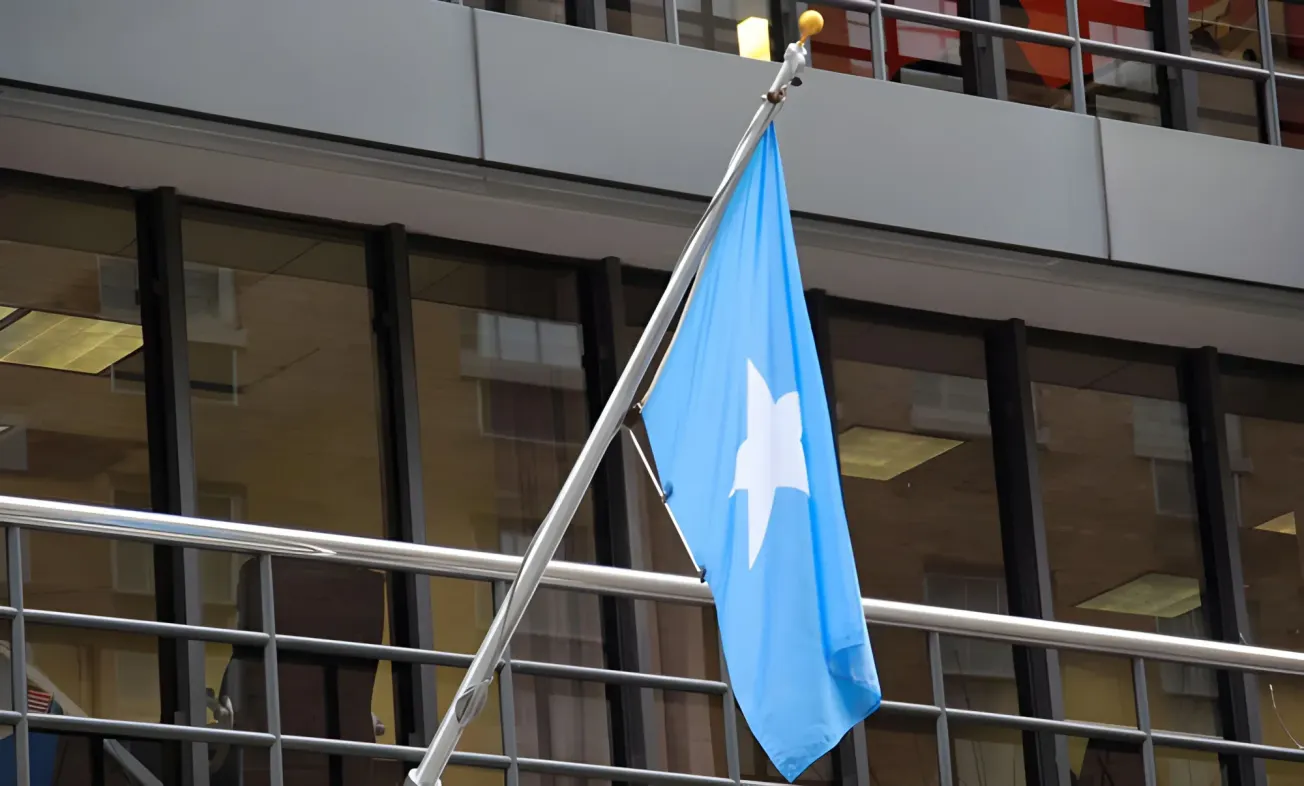
Mogadishu’s argument begins with international law and the existing diplomatic order. The United States recognizes the Federal Republic of Somalia and its territorial integrity, as do the United Nations, African Union and nearly all governments.
But Mogadishu also has a strategic argument.
The federal government remains an important American partner against al-Shabaab. It can contend that Washington does not need to redraw Somalia’s internationally recognized boundaries to obtain security cooperation, commercial access or relationships with authorities in Hargeisa.
New York will provide another arena when world leaders gather for the United Nations General Assembly.
There the imbalance becomes more pronounced. President Hassan Sheikh Mohamud, who is expected to attend UNGA, can operate through Somalia’s formal diplomatic representation and its membership in the United Nations. Mogadishu can seek support from governments already committed to Somalia’s territorial integrity.
Hargeisa has no equivalent standing at the UN. Its representatives must instead work around the formal system, pursuing bilateral contacts, investors, diaspora networks and policymakers gathered in New York.
This is why describing the coming weeks simply as a diplomatic contest between Hargeisa and Mogadishu misses something important.
The deeper story is about Somalis and the political fragmentation that has endured since their state collapsed.
Some built an internationally recognized federal system around Mogadishu. Others built a separate administration in Hargeisa and seek independence. Puntland and other federal member states developed their own centers of political power while remaining within Somalia. Clan and territorial disputes created still more competing interests. Al-Shabaab exploited the resulting weakness while pursuing an entirely different and violent project.
None of those questions has been fully settled.
The Washington lobbying campaigns are therefore an international extension of a conflict that remains profoundly domestic. FARA filings merely make part of that competition unusually visible.
The delegations may carry different messages, employ different lobbyists and pursue different meetings. But the argument they bring to Washington remains essentially Somali: 35 years after the collapse of the state, who belongs within Somalia and where political authority should reside.