Table of Contents
This month, eight years after Ethiopia’s government and the Ogaden National Liberation Front (ONLF) signed a peace agreement, the Somali Region is an island of relative calm in an increasingly turbulent country. The question is whether that calm can survive if Ethiopia’s conflicts spread beyond the north.
The October 2018 agreement ended a long insurgency. ONLF fighters demobilized, exiled leaders returned and the movement entered legal politics. In Jigjiga, Mustafe Muhumed Omar, better known as Cagjar, presided over a regional government that replaced the violent order associated with Abdi Iley and his Liyu Police.
That settlement has proved surprisingly durable. But Ethiopia around it has changed. Fighting has returned to Tigray, Fano remains active in Amhara and the Oromo Liberation Army continues its insurgency in Oromia. Several opposition movements are now attempting to coordinate their campaigns against Prime Minister Abiy Ahmed’s government.
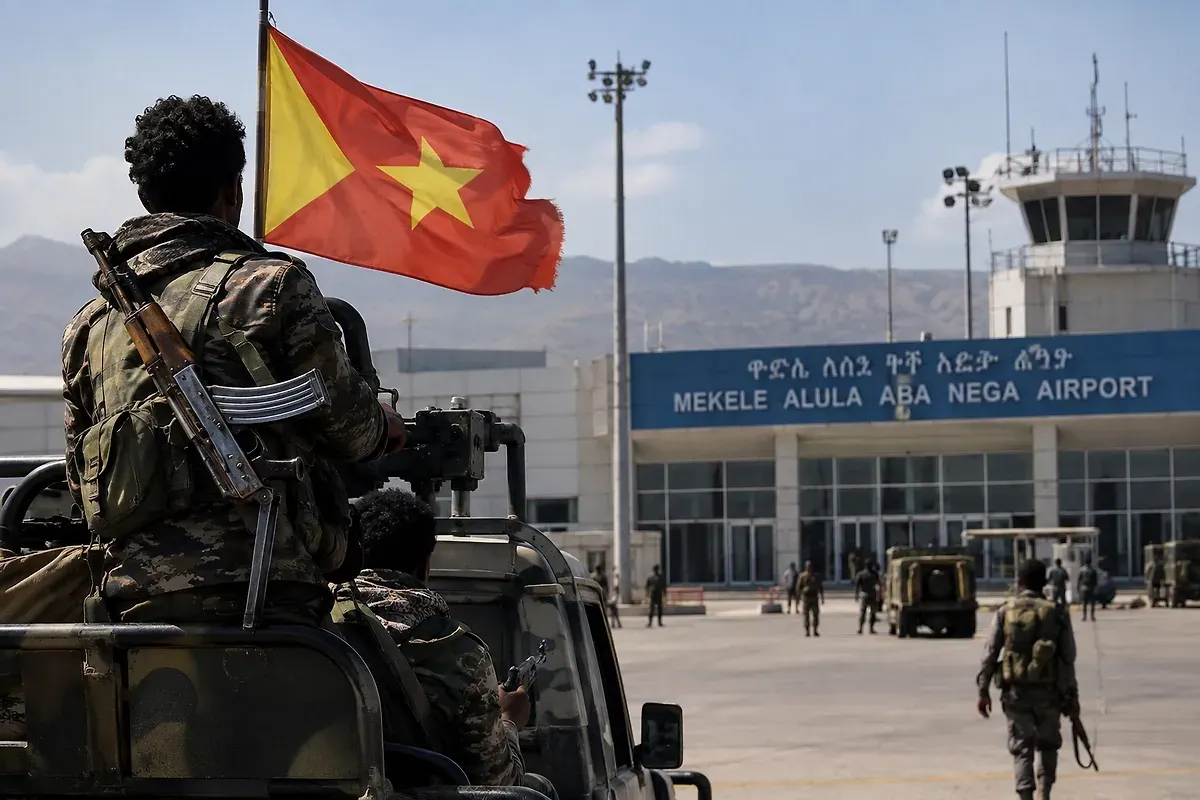
The rapid changes in Tigray illustrate the uncertainty. Tigrayan forces recently controlled Mekelle before withdrawing as federal and allied forces entered the regional capital. Their retreat did not necessarily amount to their destruction. Since substantial forces remain intact, resistance could shift towards a more dispersed insurgency.
For the Somali Region, this raises an uncomfortable question. What happens if Ethiopia enters a prolonged period in which the federal government controls the main cities and roads while armed opponents remain capable of fighting across several regions?
Three Somali Region political camps are positioning themselves for that possibility.
The strongest is Cagjar’s Prosperity Party. It controls the regional administration, security institutions and political machinery. Cagjar has begun another five-year term after and appointed a new cabinet. His most persuasive argument is also the simplest: the Somali Region has enjoyed considerably greater stability since 2018, and renewed rebellion could squander it.
Then there is the ONLF, divided into two camps. The Jigjiga-based leadership under Abdikarim Sheikh Muse, known as Qalbi-Dhagax, remains formally opposed to the Prosperity Party but shares one important assumption with Cagjar. It believes the 2018 peace settlement should survive. Qalbi-Dhagax’s faction rejects renewed armed confrontation and denies that the ONLF has joined the coalition fighting Abiy’s government.
The rival ONLF faction associated with Abdirahman Mahdi has reached a different conclusion. It argues that the post-2018 political process has failed to address important Somali grievances and has joined the emerging alliance of Ethiopian opposition movements, which includes organizations associated with Tigrayan, Amhara, Oromo and other constituencies.
For that coalition, Mahdi provides something useful: Somali representation. Without his faction, the alliance risks looking predominantly like a collection of insurgencies from northern and central Ethiopia. His presence allows it to claim a broader national character.
Yet Mahdi’s importance appears greater politically than militarily. There is little public evidence that his faction has rebuilt the old ONLF fighting force, controls territory or is conducting a sustained insurgency inside the Somali Region. Fano, the OLA and Tigrayan forces remain far more consequential on the battlefield.
This leaves an unusual three-way contest in Jigjiga. Cagjar controls the state. Qalbi-Dhagax challenges the government politically while defending the peace settlement. Mahdi challenges both the existing ONLF leadership and, more fundamentally, the political order established since 2018.
For now, Cagjar has the advantage of institutions. Regional security forces remain intact; the Prosperity Party dominates government and there is no large armed movement operating against it. His new administration also appears designed to maintain representation across the region’s communities despite some clan level grievances.
But institutions are only as durable as the political bargain supporting them. The 2018 settlement rested on the belief that Somali grievances could be pursued more effectively through politics than through insurgency. If Ethiopia’s federal institutions weaken substantially, that proposition could come under pressure.
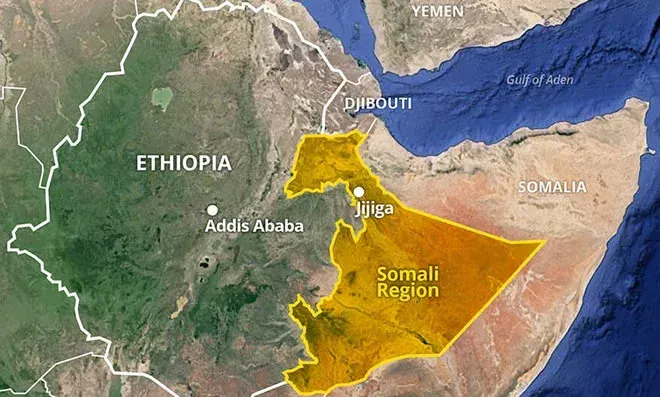
The Somali Region matters far beyond Jigjiga. It borders Somalia, Djibouti and Kenya and sits astride routes linking landlocked Ethiopia to the sea. If Addis Ababa finds itself fighting simultaneously in Tigray, Amhara and Oromia, keeping the east peaceful becomes an economic and strategic necessity.
Mahdi’s real test, therefore, is not whether he can sit alongside Fano, Oromo and Tigrayan representatives in an opposition alliance. It is whether he can build a meaningful constituency inside the Somali Region, particularly among former ONLF fighters, younger activists and people dissatisfied with the implementation of the 2018 agreement.
Qalbi-Dhagax faces the opposite problem. By defending peaceful politics, he may help protect the region from war. But if his ONLF becomes too difficult to distinguish from Cagjar’s government, Mahdi can argue that legal opposition has become ineffective. Qalbi-Dhagax must show that opposition without insurgency can still produce results.
Cagjar faces the largest responsibility. Security forces can suppress armed challengers, but they cannot by themselves preserve the political bargain created in 2018. His strongest defense against Ethiopia’s instability may be ensuring that peaceful opponents retain political space and that former insurgents continue to believe they have more to gain from politics than from guns.
For eight years, that calculation has largely held. Cagjar is betting on continuity, Qalbi-Dhagax on peaceful opposition and Mahdi on a changing Ethiopian order.
As conflict reshapes the rest of the country, the real test in Jigjiga will be whether these competing bets can remain political. If they can, the Somali Region may prove one of the more resilient parts of Ethiopia. If they cannot, the peace agreement that ended one conflict may become another casualty of the country’s widening turbulence.