Table of Contents
President Hassan Sheikh Mohamud appears to be winning Somalia’s current political contest in the short term. His administration has consolidated public support in Mogadishu and surrounding regions, while the opposition has steadily lost momentum both politically and publicly. In terms of perception and state leverage, the government currently holds a commanding position. Yet beneath this apparent victory lies a deeper and more dangerous risk for Somalia’s future.
The danger is not necessarily the immediate survival of the opposition. The greater danger is the gradual emergence of what can be described as a multi-track diplomatic reality, where foreign powers increasingly engage Somalia through separate political and regional centers instead of through one unified national framework. If Somalia’s political crisis remains unresolved, this fragmented approach could slowly become normalized under President Mohamud’s watch.
Recent attempt by Somali elders and traditional leaders to mediate between the government and opposition demonstrate how difficult consensus-building has become. The mediation initiative failed before it could even formally begin. According to some elders involved in the discussions, disagreements quickly emerged among the elders themselves. Some were sympathetic to the government while others leaned toward the opposition. As a result, they could not even agree on forming a unified committee to lead negotiations.
This failure a wider fragmentation within Somali society and politics. The inability to organize a credible mediation effort leaves the political process increasingly dependent on state power rather than consensus and reconciliation.
Meanwhile, the international community has remained largely passive in public. Western governments, regional actors, and international organizations have limited themselves to general calls for dialogue, calm, and negotiated settlement. There has been no visible coordinated pressure on either the government or the opposition to compromise. While private diplomacy may exist behind closed doors, public engagement has been cautious and restrained.
Pursuing their own diplomatic interests, that caution may eventually evolve into strategic compartmentalization. Foreign governments often prioritize security, trade routes, and geopolitical influence over unresolved local constitutional disputes. If Somali political actors fail to reach a broad agreement, international powers may increasingly decide to engage the country according to perceived realities on the ground rather than waiting for a unified political settlement.
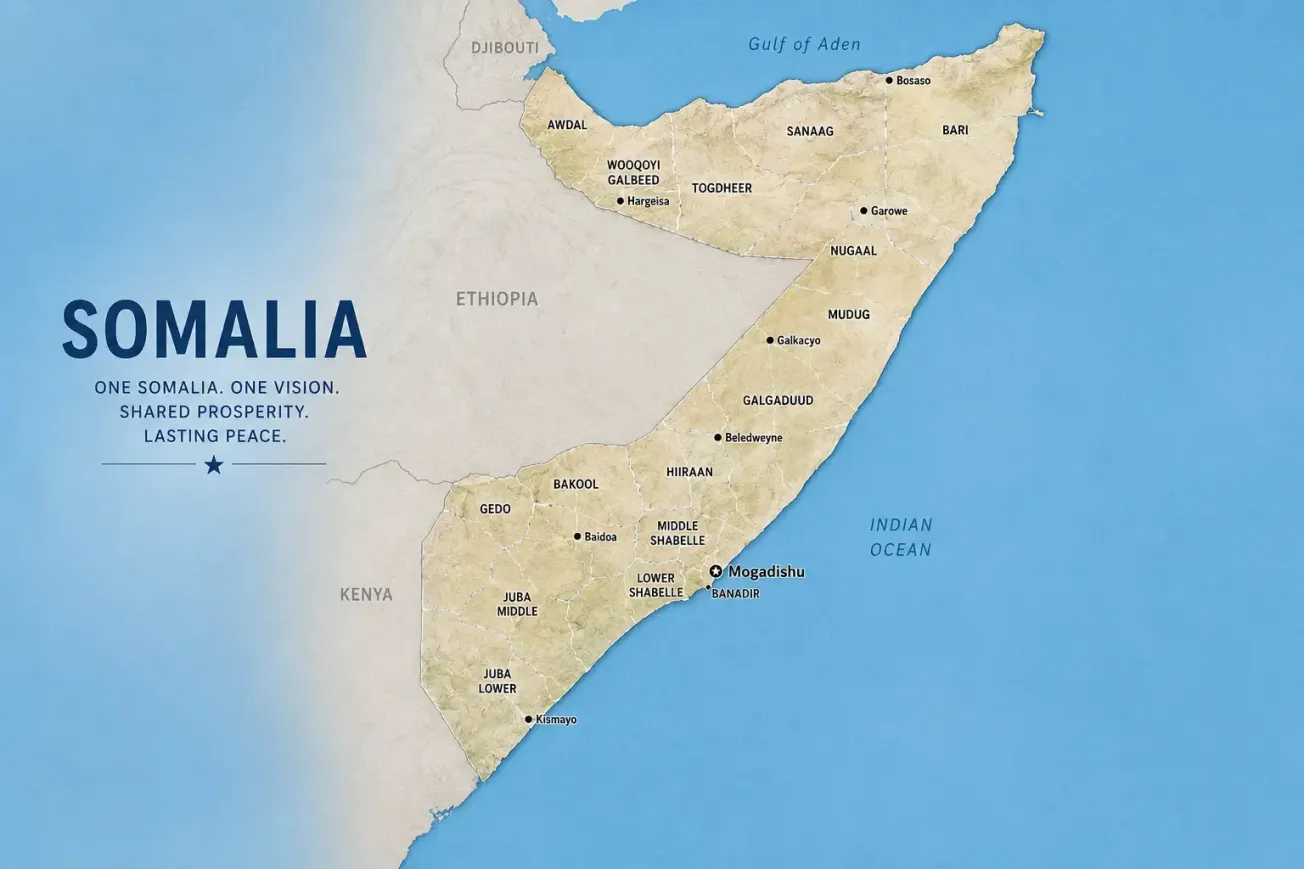
This is where the concept of risky multi-track diplomacy for Somalia becomes relevant. Under such an arrangement, external actors effectively deal with Mogadishu and southern Somalia as one political center, Somaliland as another, and Puntland or other autonomous regions as separate security and economic partners. Over time, this creates parallel channels of diplomacy that weaken the idea of a single national political framework. Unfortunately, some regional powers are even more content with fragmented Somalia than a unified nation.
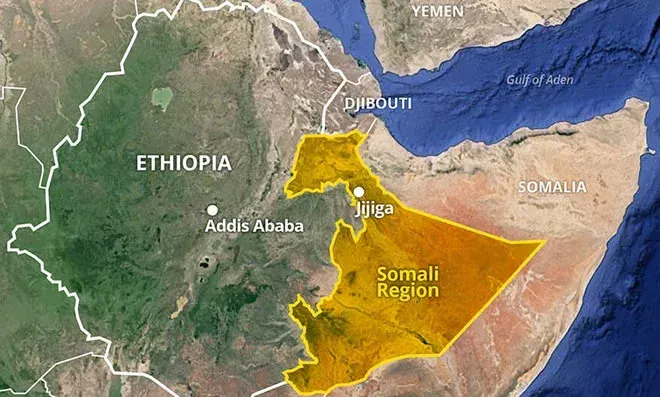
There are already signs of this emerging reality. Somaliland has increasingly developed relationships that operate independently from Mogadishu, including recent engagements connected to Israel. Puntland maintains security and economic ties with the United Arab Emirates. And, Turkey remains heavily invested in strengthening the federal government and central institutions in Mogadishu. Other regional players such as Kenya and Ethiopia maintain their influence over their respective adjacent Somali regions.
These are not isolated developments. Together, they reflect the possibility of different foreign actors building influence through separate Somali political centers according to their own strategic and geopolitical priorities. If left unmanaged, these relationships could gradually reinforce fragmentation rather than national cohesion.
There is also historical precedent for such an approach. Before the establishment of the current federal government, Somalia experienced long periods of weak or absent central authority. During that era, several international actors justified engaging regional administrations directly by arguing they were simply dealing with the “realities on the ground.” In practice, this evolved into forms of dual-track diplomacy where regional entities and local authorities became primary interlocutors instead of a strong national government.
Today’s environment risks reviving that logic on a larger scale. The difference now is that Somalia formally possesses a recognized federal government, yet unresolved disputes over elections, constitutional arrangements, and political legitimacy continue to weaken confidence in national unity. If these disputes persist, external powers may once again conclude that fragmented engagement is more practical than waiting for Somali leaders to achieve consensus.
President Mohamud may therefore face a paradox. In the immediate political arena, he appears stronger than his opponents. His government has successfully diminished opposition influence in Mogadishu and maintained institutional control. However, short-term political dominance does not automatically translate into long-term national consolidation. In fact, if political exclusion and unresolved disputes continue, Somalia could become more fragmented internationally even while the presidency appears stronger domestically.
The responsibility ultimately lies with both the government and the opposition to prevent this outcome. Somalia’s leaders must recognize that the current political crisis extends beyond electoral competition or temporary power struggles. What is at stake is whether Somalia continues moving toward a unified national political order or gradually drifts into an internationally managed patchwork of competing regional spheres of influence.